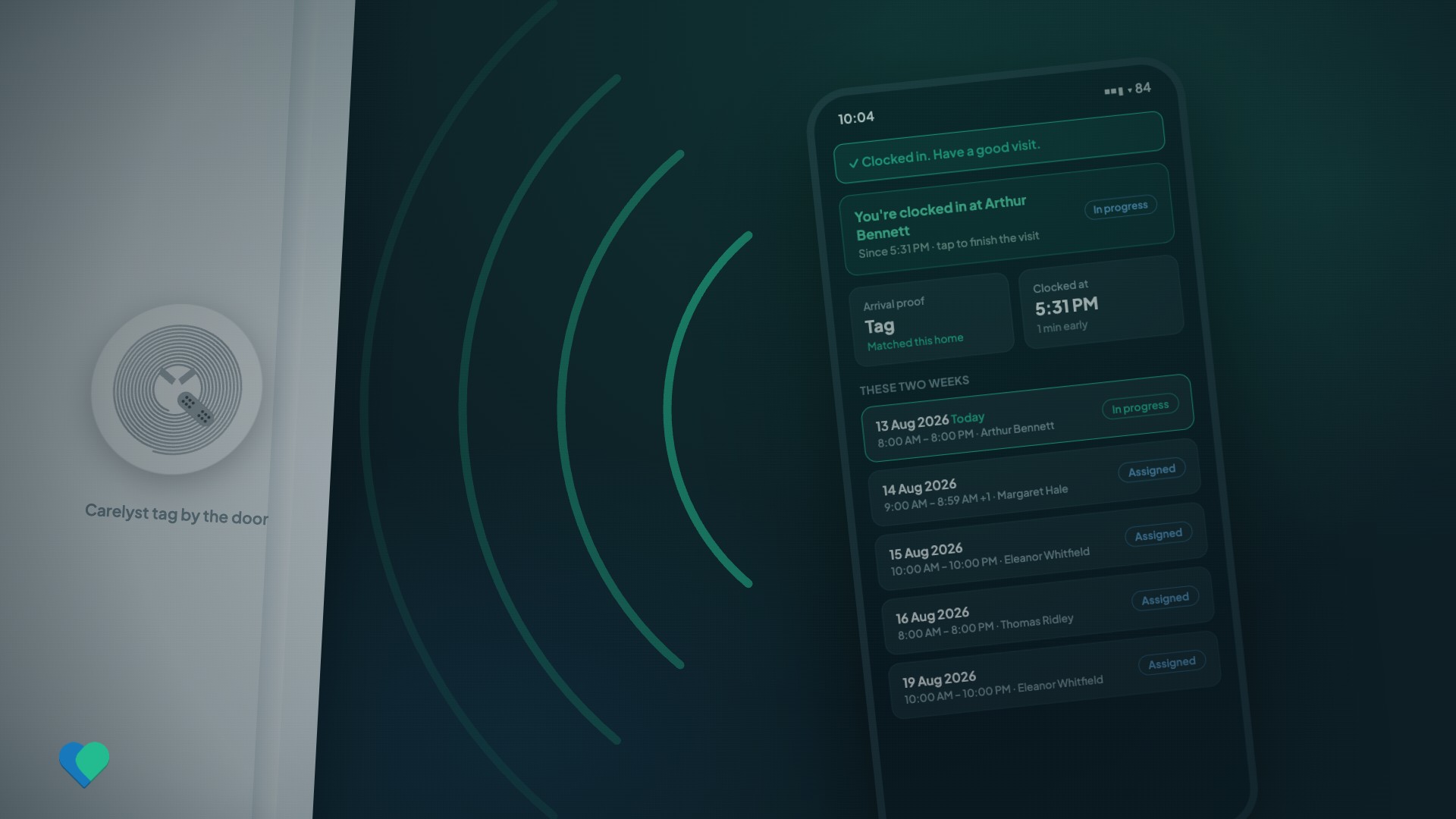
What a home tag is
The same tap technology as a contactless bank card.
A home tag is a small adhesive NFC sticker with a tiny chip and antenna inside, powered by the tap itself: no battery, nothing to charge, nothing to wear out. It is the same technology a contactless bank card uses for tap-to-pay. Fixed inside the door frame or wherever suits the household, it quietly waits for years.
At clock-in, the caregiver holds their phone to the tag, and the visit records proof it started at that home. Unlike a code on paper, a physical tag cannot be photographed and shared: being there is the only way to tap it.
This is the everyday path for agencies whose caregivers carry their own phones. Teams without smartphones are served by the attendance kiosk instead, which has its own equipment and its own page.
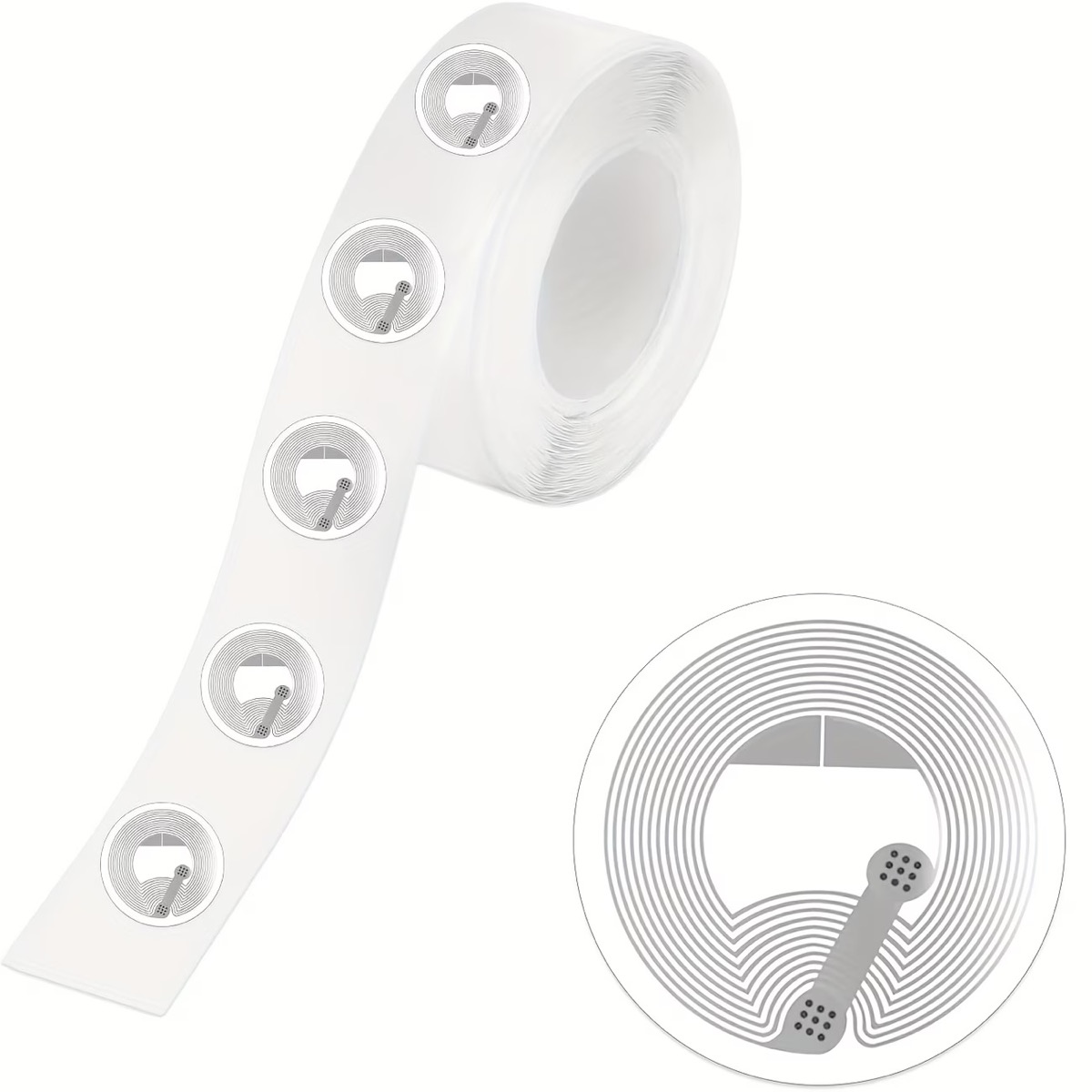
A roll of tap stickers: about ten cents each, and one per client home is all it takes.
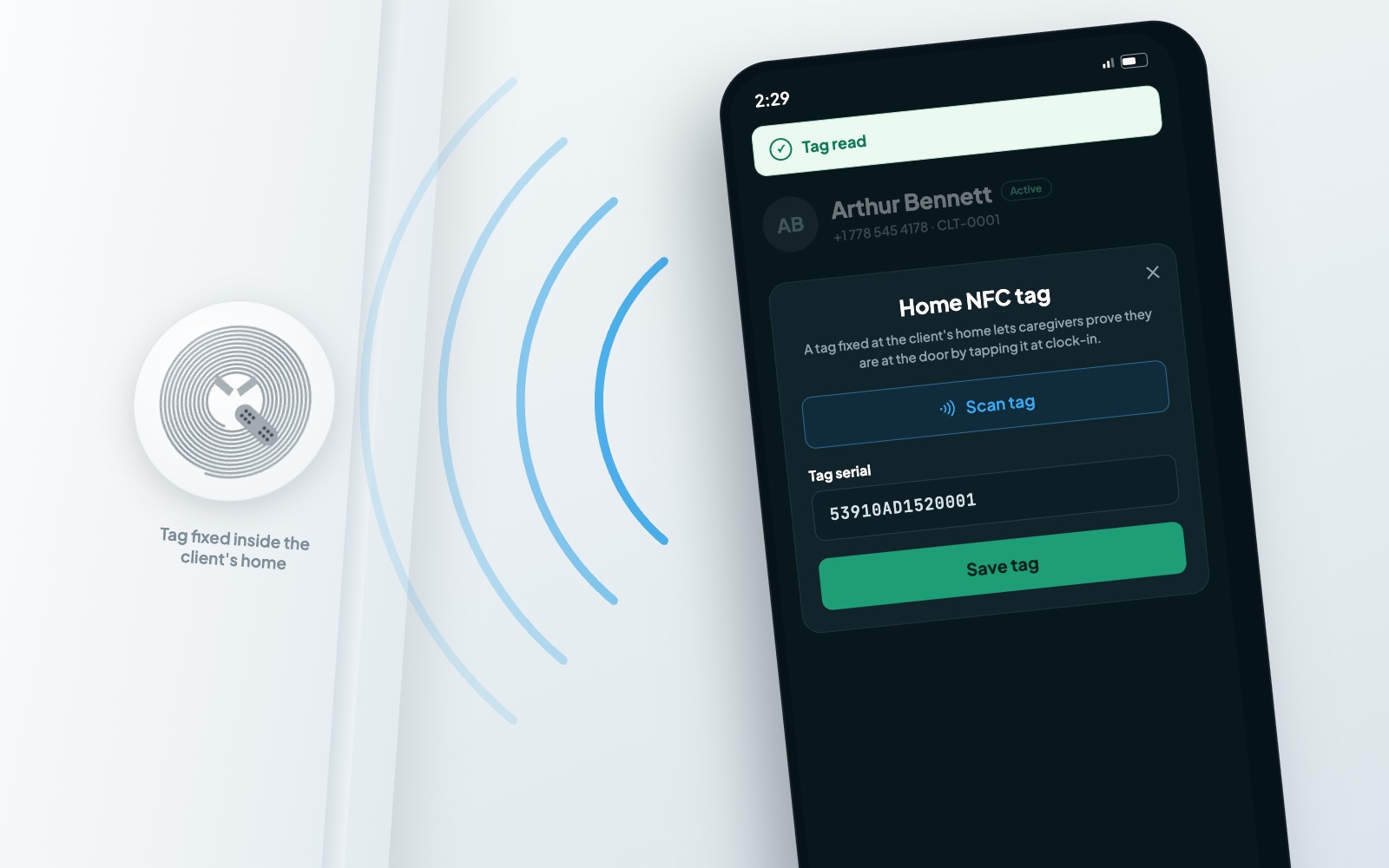
Step one · The office
Registered in a minute, from the client's profile.
- Open the client's profile, choose Register home tag, and hold the sticker to an Android phone. Scanning fills the serial by itself; typing it in works just as well.
- One serial belongs to one client, ever. Registering a replacement retires the old sticker in the same motion.
- Then fix the sticker at the home: inside the door frame, on the fuse box, wherever suits the household. Nothing about the client is stored on it.
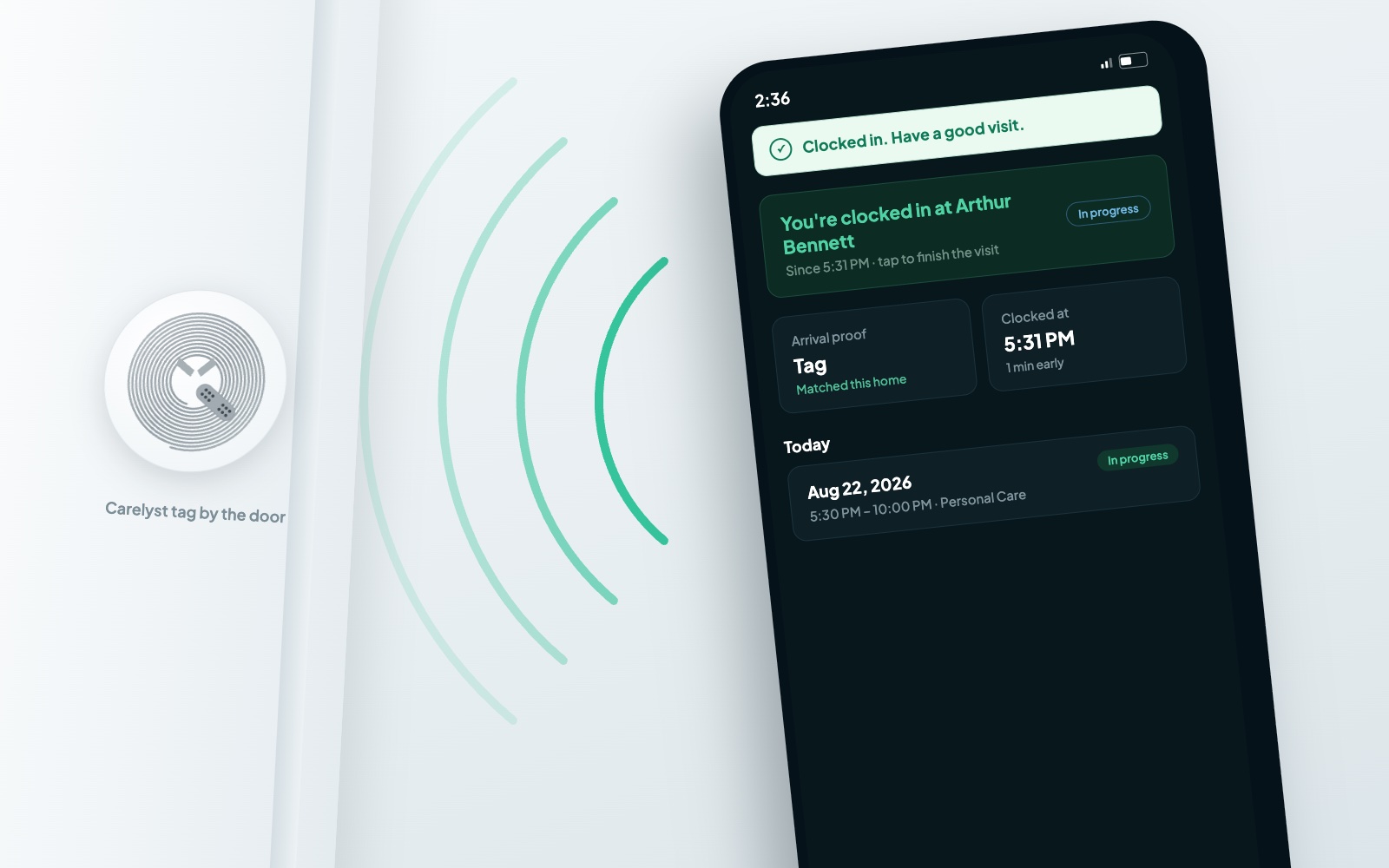
Step two · At the door
The tap is the strongest proof of arrival.
Arriving at a tagged home, the caregiver is offered the tap at clock-in. One touch against the sticker and the visit carries its arrival proof: tag matched, this home, this minute.
A verified tap stands in for the GPS check entirely, and a tap that does not match the client's registered tag is refused on the spot. Clock-out offers the same voluntary tap, so the visit can close with departure proof too.
Step three · The exceptions
Care never waits for a sticker.
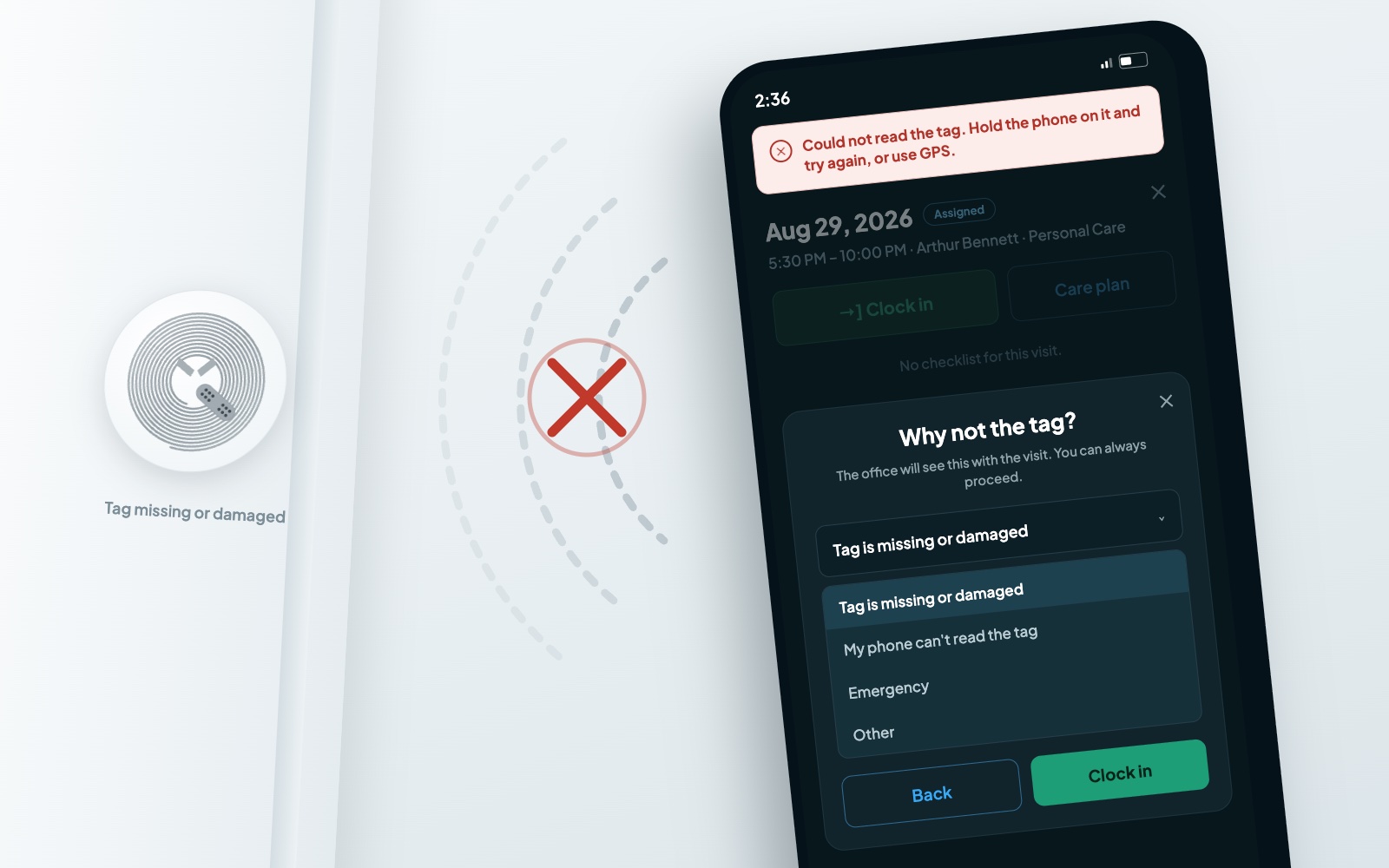
A missing sticker, a damaged one, a phone that cannot read it: the caregiver picks the reason from a short list, clocks in with GPS, and care starts. Nothing here ever blocks a visit.
The reason travels with the visit, the visit carries a flag, and one filter pulls the office's full exception list. If you want a firmer rule, an agency setting requires the tap at tagged homes, and skipping it then always asks for a stated reason.
The cost
Ten cents of hardware per client.
The stickers are the entire shopping list. Caregivers tap with the phones they already carry, the office registers tags with the phone it already has, and there is no reader, no charger, and nothing to install at the home beyond the sticker itself.
These are typical street prices from public marketplaces, not ours: Carelyst does not sell hardware or take a margin on it.
What tagging your clients costs
Estimated street prices. Caregivers use their own phones, so there is nothing else to buy.
We have tested specific sticker packs with Carelyst and will gladly share the exact shopping list, or arrange the order for you.
Ask us about tagsCommon questions about home tags.
Tag your first client home this week.
Start your 30-day free trialNo credit card to start · Watch this video on YouTube · Caregivers without smartphones? See the attendance kiosk